

India's Next
Hockey Generation
Starts Now.
Breaking barriers and building opportunities to grow ice hockey in India.
Ice Hockey in India Today

Only One Indoor Rink
Access is extremely limited for aspiring players.

Seasonal Outdoor Play
Weather and terrain restrict consistent training.

Limited Equipment
High costs and low availability hold players back.

Few Certified Coaches
Lack of trained coaches limits development.

Minimal Exposure
Little visibility and pathways to high performance.

Little Funding
Lack of financial support slows the growth of the sport.


The Impact We Aspire to Make


These represent the long-term goals Ice Age India aspires to achieve.
The Potential is Limitless.
- 1.4 Billion People — The world's largest population
- 50% Under Age 30 — A young and dynamic nation
- Growing Interest in Winter Sports
- Rising Middle Class & Global Exposure
- India's Time for Ice Hockey is Now
Talent exists everywhere.
Opportunity does not.
A Vision Born on Ice

After playing hockey since age five, I discovered that India had an ice hockey team but very limited resources and opportunities.
Instead of asking why, I decided to ask:
"What can I do to help?"
– Tanush
Building a Hockey Ecosystem

Make Hockey Accessible
Remove financial and geographical barriers to the sport.
Develop Young Talent
Provide training, mentorship and resources to help players grow.

Build a Strong Community
Create a supportive network of players, families, coaches and supporters.
Create Global Opportunities
Enable exposure through international exchanges and collaborations.

Build the Future
Work towards infrastructure development for long-term sustainability.
How You Can Help

Donate
Your contribution helps us equip, train and empower young players.
Sponsor a Player
Change a young athlete's journey through your support.

Partner with us
Collaborate with us to build a stronger hockey ecosystem in India.
Join the Movement
Spread the word and help grow the game.
News & Stories
Ice Age India Stories
25 October 2026
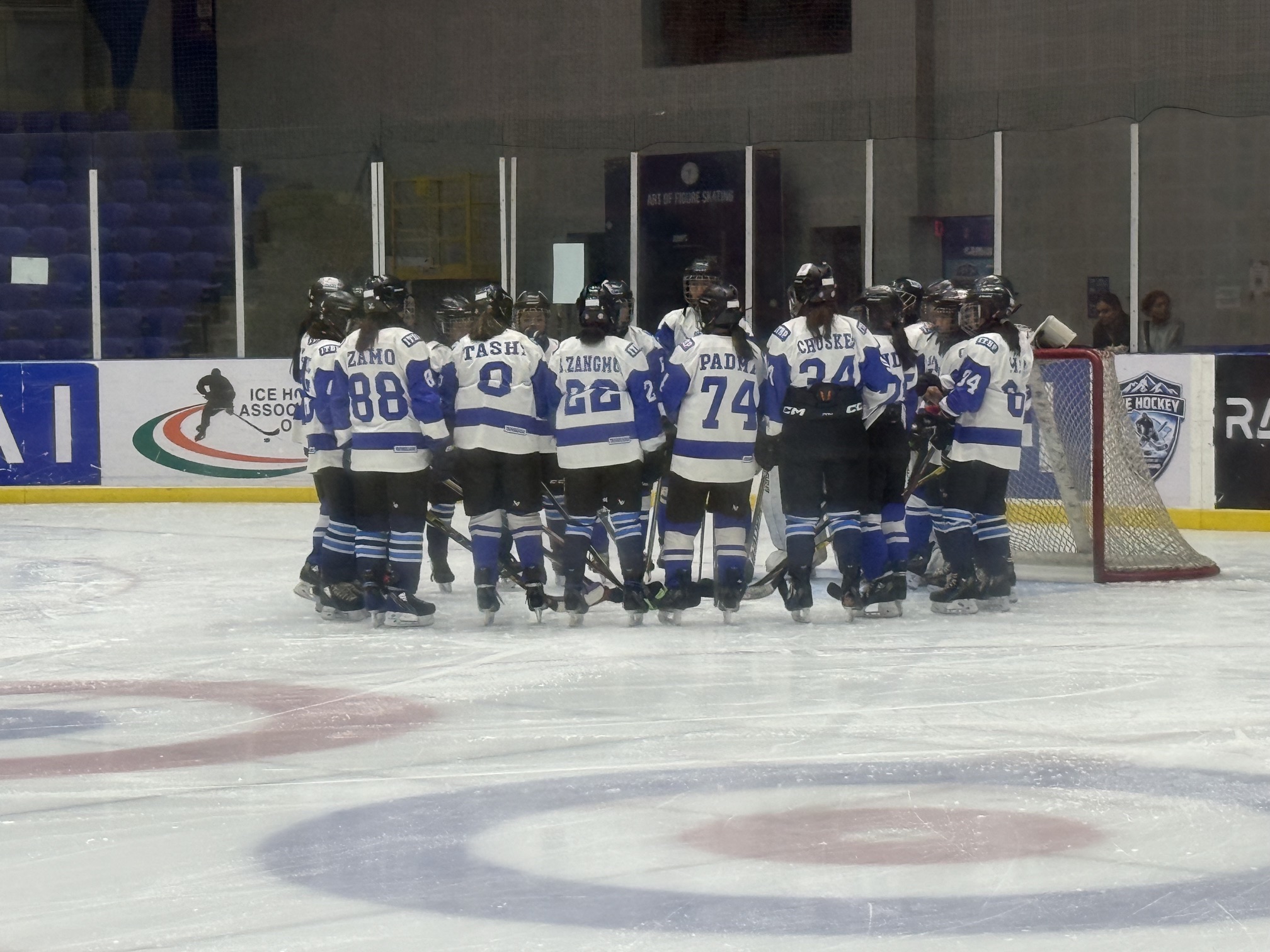
Same Passion, Different Ice — Meeting India's Hockey Players
*July 2026 | Himadri Ice Rink, Dehradun* *By Tanush Doshi* If seeing the Himadri Ice Rink was exciting, what happened next was even better. I finally got to meet the people behind ice hockey in India! I had the opportunity to meet the President of the Ice Hockey Association of India (IHAI), members of the board, and coaches and players from teams representing Chandigarh, Maharashtra, Jammu & Kashmir, Tamil Nadu, Himachal Pradesh, and even the Indian Army. It was pretty amazing seeing players from so many different parts of India come together for a sport I love. But what really blew my mind was hearing how they train. Many of the players practice using roller hockey because they don't have regular access to ice. Some had spent just two or three days on actual ice, for a couple of hours each day, before coming to compete in the tournament. Wait, what? I couldn't imagine preparing for a hockey tournament with only a few hours of ice time. Back in Chicago, we sometimes practice several times a week, and even that doesn't always feel like enough! Yet here were these players, skating hard, competing confidently, and giving everything they had. And that was probably my biggest surprise. They weren't hesitant or intimidated. They played with confidence, intensity, and fearlessness. They competed hard, challenged each other, and clearly wanted to win. Watching them, I almost forgot how little time some of them had spent training on ice. Different resources. Different opportunities. But the exact same competitive spirit. I also got to spend time speaking with the IHAI President, board members, and coaches. Hearing their perspectives helped me understand just how much effort goes into keeping the sport growing, especially when access to facilities and training is so limited. But my favorite part was talking to the players themselves. We exchanged stories about practices, games, training, and what hockey means to us. Despite growing up thousands of miles apart, we had so much in common. It felt less like meeting strangers and more like talking hockey with teammates back home. And then there were the women's teams. Honestly, they were incredible! Seeing the confidence, determination, and skill with which the girls competed was inspiring. In a country where girls don't always have the same opportunities or encouragement to pursue sports, watching these athletes take the ice and compete so fiercely made an even bigger impression on me. They weren't asking for special attention. They were there to play hockey, compete, and prove themselves. And they absolutely did. By the end of the experience, my head was spinning with thoughts. I came to Dehradun expecting to see the challenges of ice hockey in India. And yes, those challenges are real. But what I hadn't expected was to be so impressed by the players themselves. Their passion, confidence, resilience, and determination were impossible to miss. It made me wonder: If these players can compete like this with so little access to ice, imagine what they could accomplish with more opportunities, coaching, and training. That thought has stayed with me. I left the rink feeling inspired, a little humbled, and more motivated than ever about what we're trying to build through Ice Age India. I went there thinking I might find ways to help these players. **I didn't expect them to teach me so much about what it really means to love hockey.**